Knives – The Heroes of the Kitchen

Whether for a quick dinner or an elaborate feast – nothing works in the kitchen without a good knife. Dicing vegetables, carving meat, chopping herbs and so much more simply isn't possible without the right cutting tool. From versatile all-rounders for everyday tasks to specialised designs: there's the right blade for every task and ingredient. And once you've found it, preparing food becomes not only easier but more fun.

Sort by

11 products

Filter and sort Filter
Filter and sort
Filter

11 products

11 products

Knives

  • One Knife for Everything? Why Variety Makes Sense

    When you want to buy a knife, it's easy to lose track of the huge choice: different sizes, shapes, lengths and blade types – do you really need all of them? Couldn't a single knife do everything? Well, if you like doing things the difficult way, perhaps. But these variations were developed for good reason. Whether straight blades for precise cuts, serrated ones for bread and tomatoes or wide ones for chopping herbs – each type has its own specific purpose. A small, pointed paring knife is excellent for intricate work, while a long, robust blade makes carving meat easier. The variety doesn't just make cutting more efficient – it also helps ingredients keep their shape and texture.

    Each knife has been developed to make specific kitchen tasks easier. That way, cutting isn't a challenge but a smooth, flowing movement. Choosing the right blade saves time and effort and is gentler on the food you're cutting. It's much like any toolkit: there isn't one tool that does every job. You can make do with one that isn't a 100% fit, but it's only really quick and easy with the right one.

  • Kitchen Knife – The Everyday All-Rounder

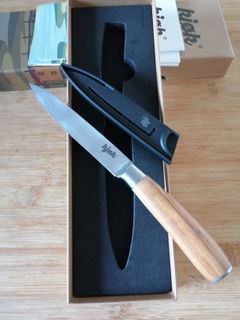
    It's the all-round talent in every kitchen. Vegetables, meat, fruit or herbs – with its versatile blade shape and medium size, it handles most cutting tasks with ease. Thanks to the even balance between handle and blade, it sits well in the hand and allows controlled work. A sharp stainless steel blade, often with a Rockwell hardness of 58, provides durability and edge retention. The edge allows fine, clean cuts without destroying the texture of the ingredients. This simple, classic cook's knife is a reliable tool that earns its place in any kitchen.

  • Blades and Materials – It's All About the Right Edge

    The blade is the heart of every knife, and the material plays a decisive role. Stainless steel is particularly popular, known for its robustness, corrosion resistance and durability. High-quality blades are often hardened in a special furnace to achieve an ideal Rockwell hardness (e.g. 58 HRC) – a balance between sharpness, stability and ease of resharpening. But it's not only the material that makes the difference – the cutting angle does too. At around 15° per side, it's ideal for fine, precise cuts. For heavy-duty work where stability is needed, a slightly larger angle can be an advantage.

    Choosing the right material and cutting angle ensures that the knife glides smoothly through your ingredients. A carefully sharpened blade stays sharp for longer, requires less effort and preserves the texture of the food.

  • Nakiri Knife – Precision for Vegetable Lovers

    The nakiri knife is the ideal helper for anyone who wants to cut vegetables very accurately and with ease. It impresses with its characteristic straight blade and wide cutting surface. This shape allows vertical, clean cuts without the blade lifting off the chopping board – ideal for fine vegetable strips, dice or julienne. Thanks to its razor-sharp stainless steel blade, the nakiri glides effortlessly through even tough vegetables such as carrots, pumpkin or cabbage. The wide blade also makes it easy to transfer cut ingredients straight into the pan or pot.

    The usually ergonomic handle, often made of real wood, provides comfort and a secure grip, even during longer cutting sessions. The nakiri knife combines tradition and efficiency and is a great choice for anyone who values precision and clean cuts.

  • A Professional Kitchen Knife Is Nothing Without a Good Handle

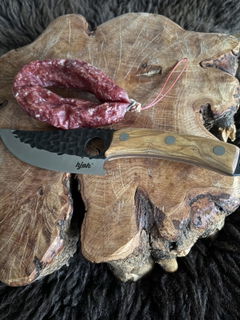
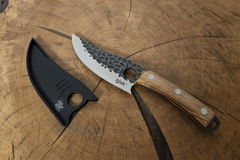
    A real wood handle doesn't just give a knife an elegant look – it also offers practical advantages. Woods such as olive wood are naturally resilient and heat-resistant – ideal for everyday use in the kitchen. The natural grain gives every knife its own individual look, while the ergonomic shape ensures it sits securely and comfortably in the hand. Whether you're left- or right-handed: a well-balanced wooden handle supports precise, comfortable work. Even though a real wood handle needs a little more care, such as occasionally rubbing it with olive or linseed oil, the effort pays off. Well cared for, it stays durable and resilient and keeps its warm, natural sheen.

  • Sharp Knives Need Care

    A sharp knife isn't just more efficient – it's also safer. A sharpened blade cuts ingredients more easily and with more control, while blunt knives require more force and increase the risk of slipping. But even a high-quality blade loses its sharpness over time – that's where knife sharpeners come in. A good knife sharpener keeps your cutting tools in top form.

    Sharpening correctly not only extends the life of your knives but also keeps cutting enjoyable. Sharp blades glide effortlessly through any ingredient and make clean, precise cuts – just as it should be. Look after your knives and you'll save time, avoid frustration and get more out of your kitchen tools for longer.