Buy Knife Sharpeners – For Blades That Cut Like New

A good knife is only as good as its blade – and its sharpness fades over time. Instead of gliding effortlessly through vegetables, meat or bread, cutting becomes a test of patience. Knife sharpeners are the secret weapon for getting blades back into top shape. Whether you're a passionate home cook or only occasionally wield a wooden spoon – this helper turns every knife back into a precise tool.

Sort by

2 products

Filter and sort Filter
Filter and sort
Filter

2 products

2 products

Knife Sharpeners

  • Why Knives Go Blunt – And How to Prevent It

    With our knife sharpeners, you can make your blades sharp again – and ready for your next evening of cooking. But why do blades go blunt in the first place? Every blade, however high-quality, loses its sharpness over time. That's mainly down to everyday use: when you cut, the fine micro-teeth along the edge wear down or bend. But regular use isn't the only reason knives go blunt – external factors also play a big part. Chopping boards made of glass or stone, for example, act like sandpaper on the blade and, unlike a knife sharpener, significantly speed up wear. Incorrect storage – with knives kept unprotected in a drawer and knocking against each other – can also cause small nicks and damage.

    It also depends on what you cut with the blade. Frozen food or bones put extreme strain on the edge and can cause lasting damage. The quality of the knife itself is another factor: softer steel tends to go blunt more quickly, while blades with greater hardness stay sharp for longer but need more intensive care.

  • The Right Care – How to Keep Your Knife Sharpener in Top Shape

    A knife sharpener also needs occasional care to maintain its full performance. After each use, grinding residue and tiny metal particles build up, which can impair its function if they aren't removed. Regular cleaning ensures the sharpener works reliably and continues to sharpen blades precisely. Models with ceramic rollers or diamond coatings in particular benefit from gentle cleaning with a soft, slightly damp cloth. With whetstones, excess water should be removed to prevent cracks or warping. It's also important to protect the sharpener from big temperature fluctuations or moisture, as these can damage the materials over time. With a little care, your knife sharpener will remain a trusty tool for your sharp kitchen helpers for many years.

  • Knife Sharpeners in Action

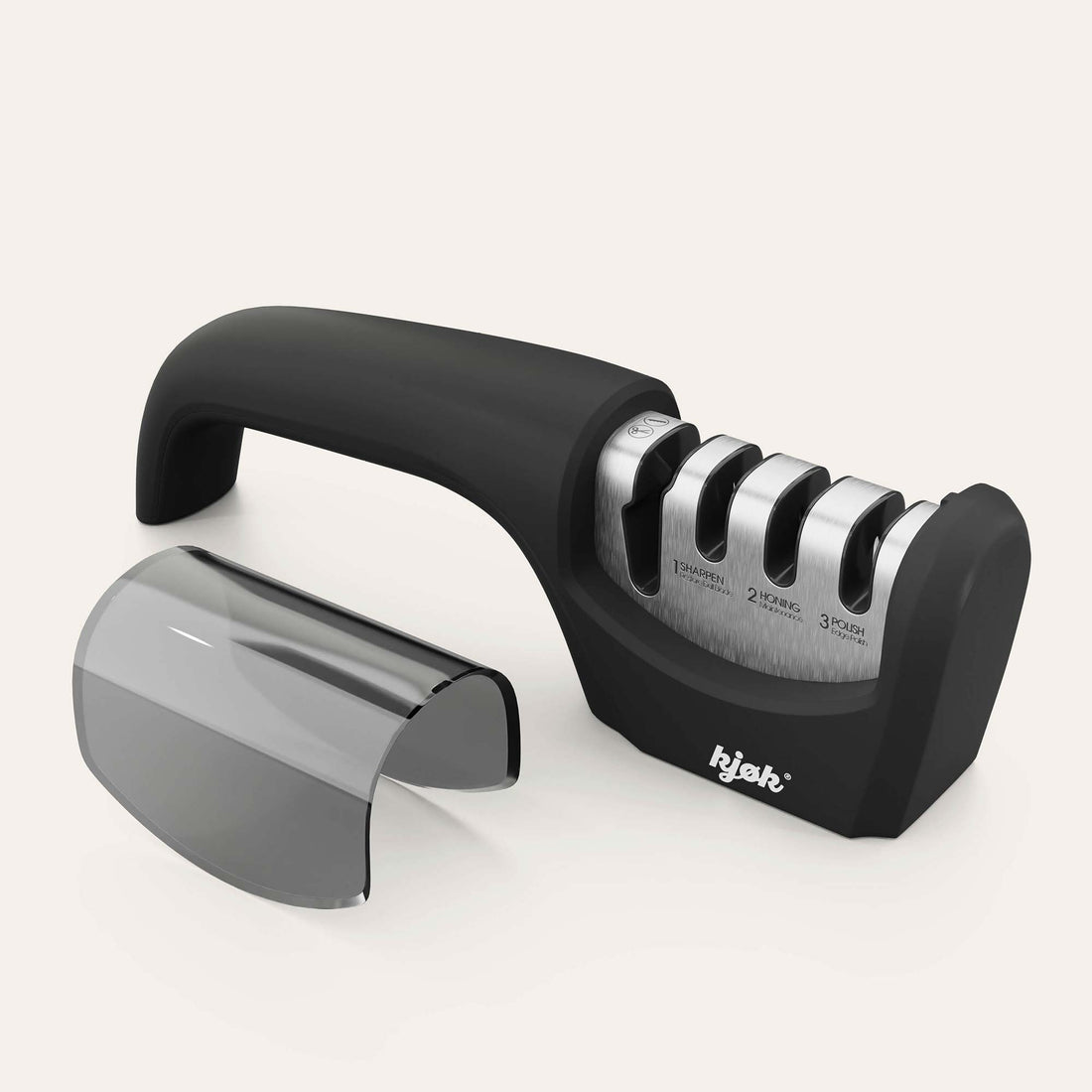
    Knife sharpeners work by renewing and smoothing the fine micro-teeth along the edge of the blade. With every cut, these teeth wear down slightly, making the knife blunt. A kjøk knife sharpener helps you restore this cutting edge – in several steps:

    • Material removal:
      The first step in sharpening is to remove a minimal layer of the blade material. This is done with abrasive materials such as ceramic, diamond or steel, which remove fine metal particles. This renews worn or damaged cutting edges. This step is particularly important for heavily used knives, to restore their original cutting performance.
    • Correcting the cutting angle:
      A knife sharpener ensures the blade is sharpened at the right angle – typically between 15° and 20°, depending on the type of knife. This angle ensures the blade stays not only very sharp but also stable. An inaccurate angle can make the blade go blunt more quickly or even damage it.
    • Smoothing the edge:
      After the material has been removed, the blade is smoothed to remove any burrs created during grinding. This step produces a precise, fine edge that glides through food without squashing or tearing it. Smooth edges not only allow exact cuts but also help the blade stay sharp for longer.
    • Gradual refinement:
      Many knife sharpeners offer several sharpening stages, from coarse to fine. The coarse stages take care of the basic shape and removing damage, while the finer stages polish the edge and create a mirror-smooth finish.

    The result: a knife that cuts like new again.

  • Did You Know?

    The art of knife sharpening goes back a long way and has its origins in the Middle Ages. Back then, travelling knife grinders were in great demand: they moved from town to town offering their services to get blunt knives, scissors and other tools back into shape. They often had mobile grindstones mounted on carts and were eagerly awaited by villagers – after all, sharp tools were important for daily life. Technology has moved on a great deal since then, but the goal remains the same: blades that cut precisely and reliably. Modern knife sharpeners bring the art of sharpening into your own home – easier and more convenient than ever.

    By the way, did you know that a well-sharpened knife is not only more efficient but also safer? Blunt blades need more force to cut, which increases the risk of slipping. With a sharp blade, on the other hand, the knife glides cleanly and easily through food.

  • The Right Tool for Every Blade

    Knives come in all kinds of shapes and designs – from straight to serrated edges. This variety also calls for suitable tools to sharpen each blade properly. While some models are universal, others have been developed specifically for certain blade types. There are classic manual knife sharpeners, electric ones, special sharpeners for knives with particularly fine edges, roller sharpeners, sharpening blocks and many more. Whether for delicate work or robust cuts – proper care starts with a sharpener that suits the characteristics of the blade. What matters is that it guides the edge at the right angle to achieve even, long-lasting sharpness.