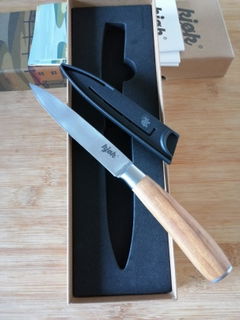
Bread Knife, 20 cm
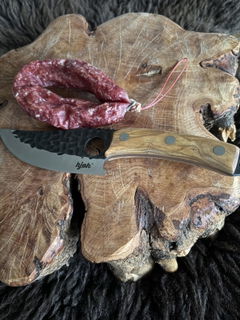
Bread knife with olive wood handle — your everyday companion for bread, roasts and more.
- Regular price
-
€23,95 - Regular price
-
- Sale price
-
€23,95
- Sharp steel blade — specially heat-treated with a precise 15° cutting edge for clean slicing.
- Wonderfully versatile — for all kinds of bread, roasts and more – as flexible as your day.
- Olive wood handle — naturally low-maintenance and pleasantly warm in the hand.
- Well balanced — for a firm grip and precise cuts.
- Ergonomic & non-slip — comfortable in the hand, for right- and left-handers alike.
- Non-stick blade — less sticking, easier cleaning, more time to enjoy.
Couldn't load pickup availability
 Free delivery & returns
 100-day trial
 High quality & durability
Description
Warnings and safety information


Manufacturer information
kjøk GmbH
Robert-Bosch-Straße 6B
86830 Schwabmünchen
Germany
Responsible for the product:
Marius Astalosch (Managing Director)
Contact information:
Phone: +49 8232 8088322
Email: organisation@kjok.pro
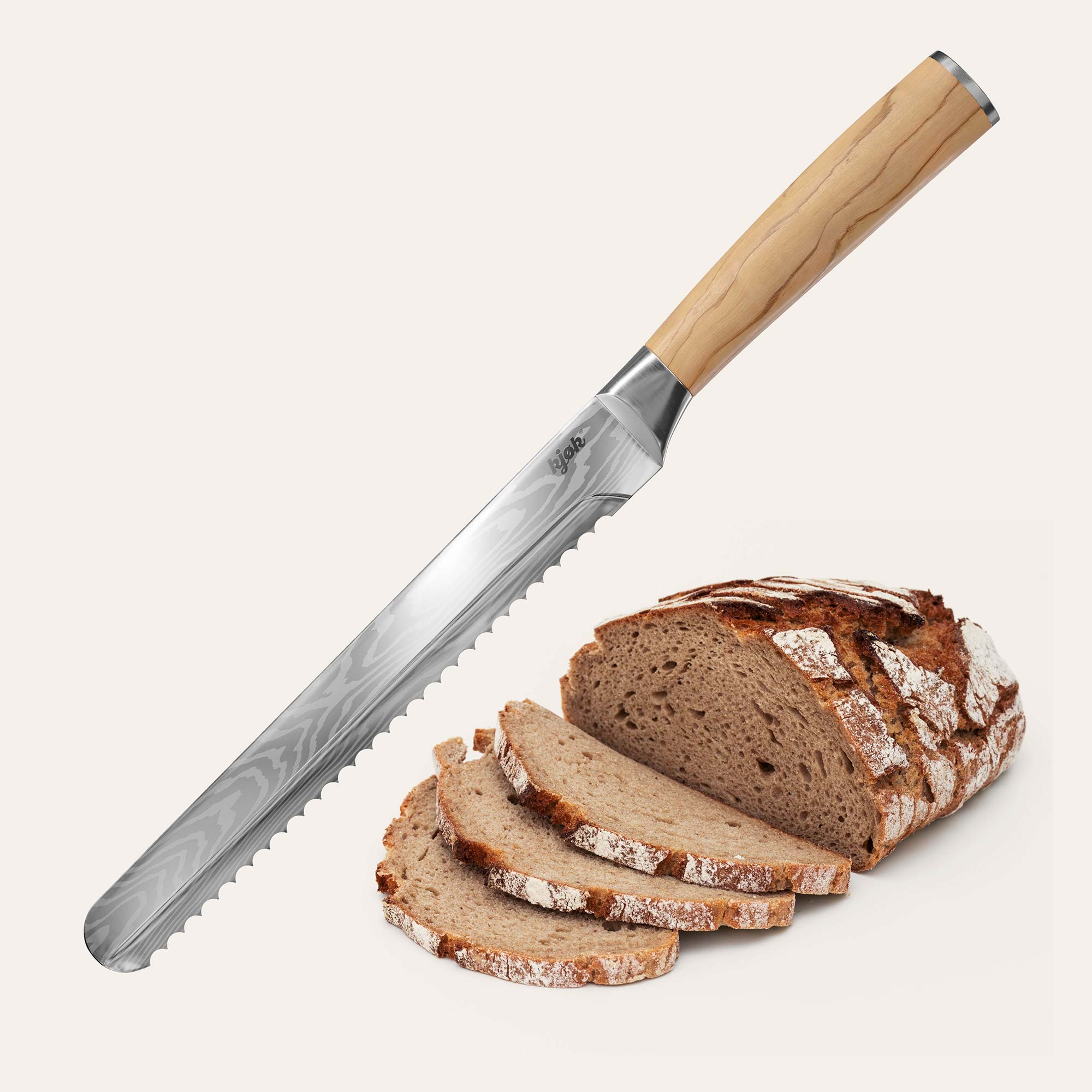


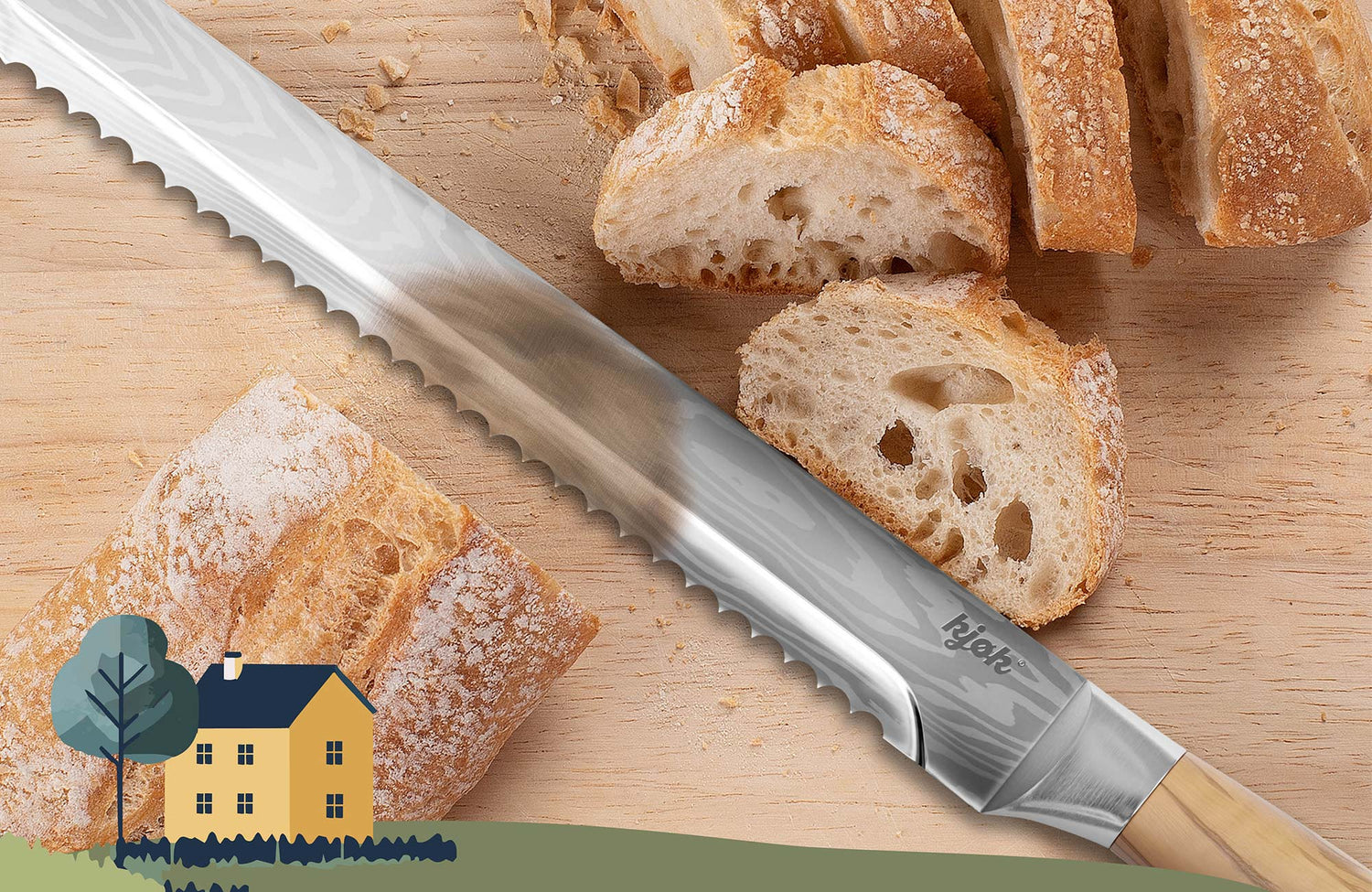
Sharp precision for even slices
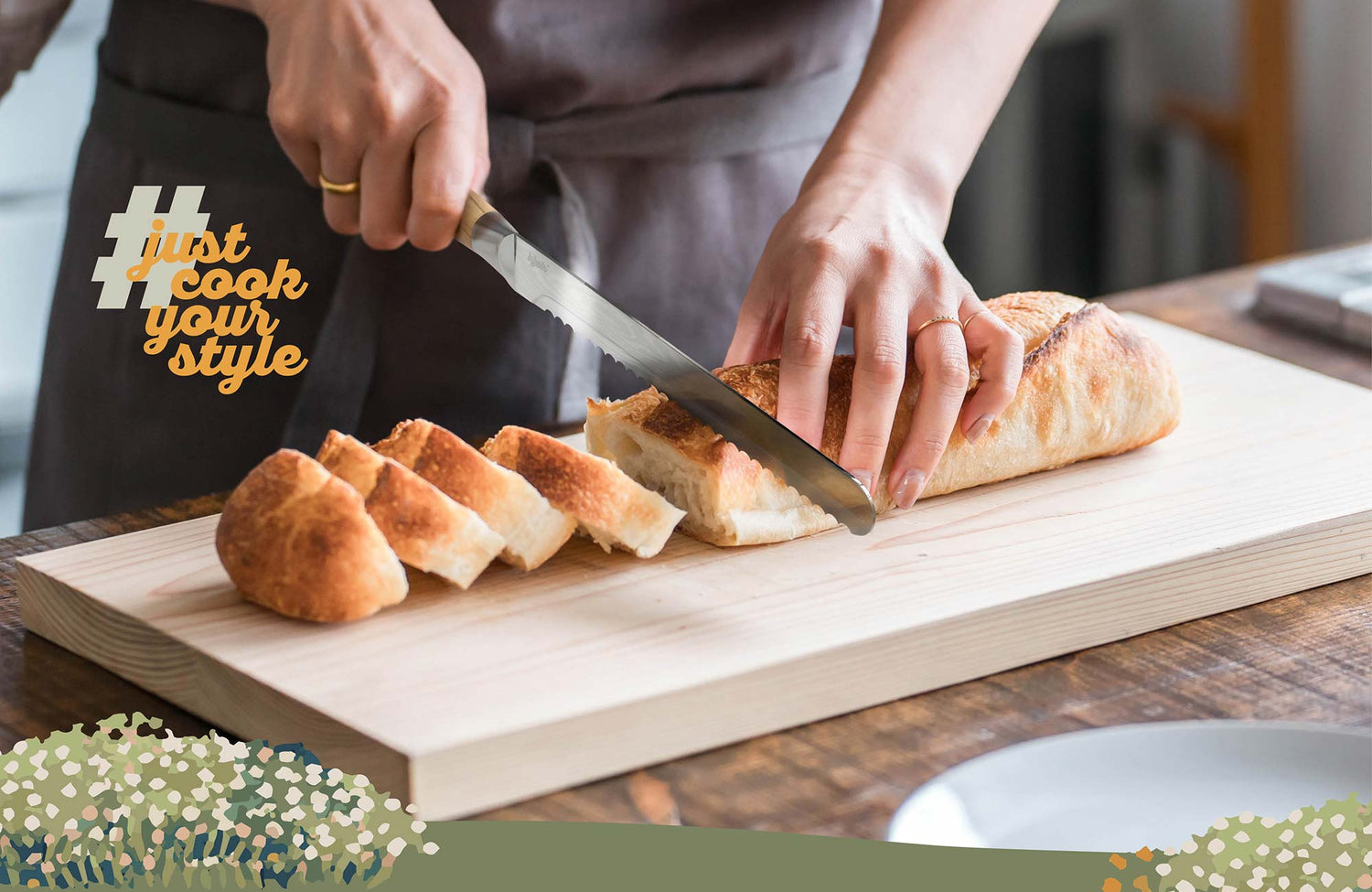
Ergonomic and comfortable in your hand
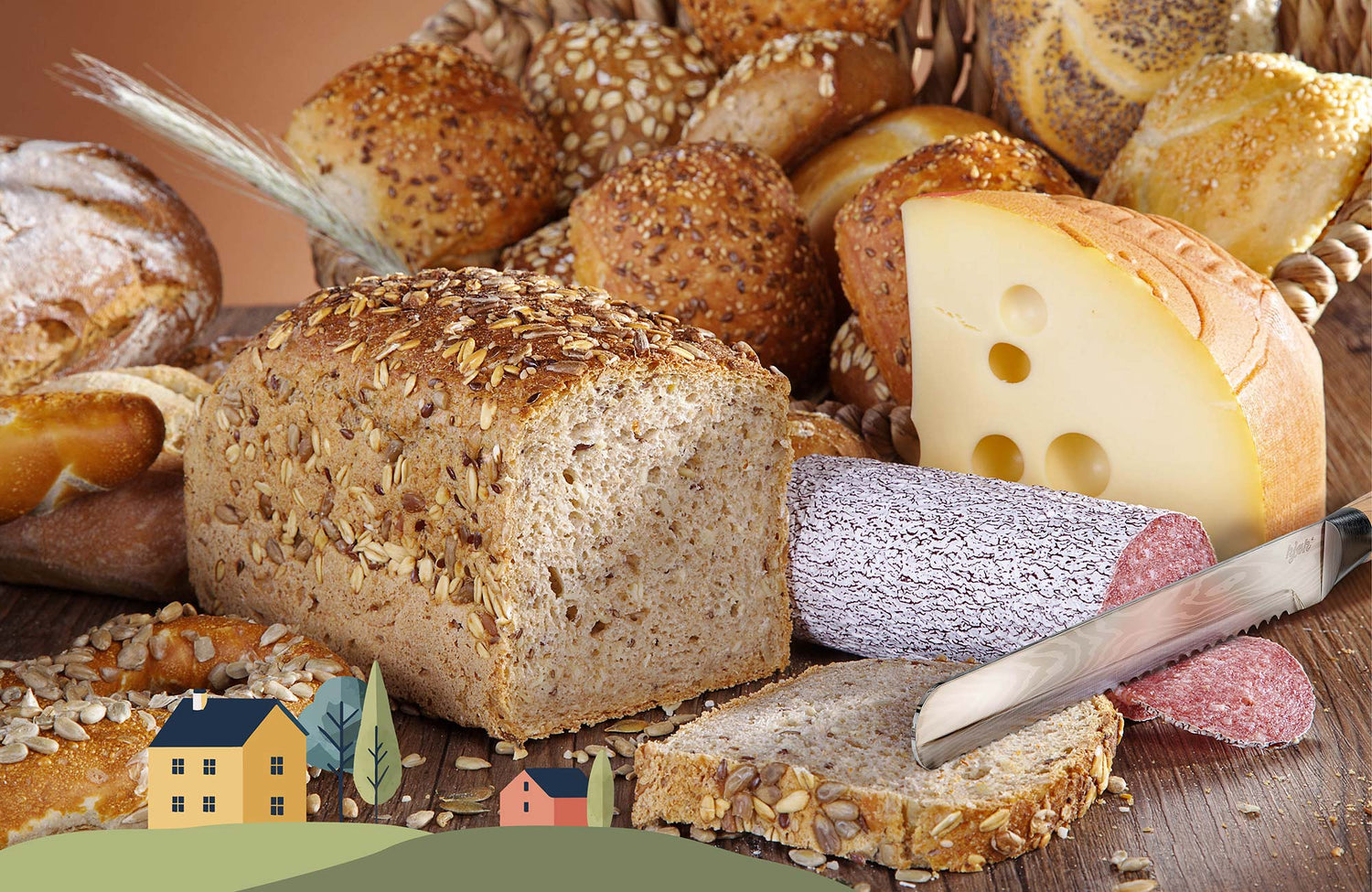
Versatile – for more than just bread
Easy to clean and long-lasting
Benefits

Assessment by kjøk
This assessment is written by the kjøk team, the maker and seller of this product. It is not a customer review or an independent test.
In short
The kjøk bread knife has a 20 cm serrated blade and an Italian olive wood handle, and weighs 158 g. It is made for crusty bread, baguettes, rolls and roasts. Worth knowing: don't sharpen the serrated edge yourself on a whetstone, and the knife is not dishwasher-safe.
Points in its favour
- Serrated edge: the teeth grip even firm crusts while barely squashing the soft crumb.
- Hardened steel blade: 56 ± 2 HRC, 15° cutting angle, 1.5 mm thick (manufacturer's data).
- Italian olive wood handle: heat-resistant, holds its shape and resists stains.
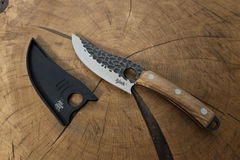
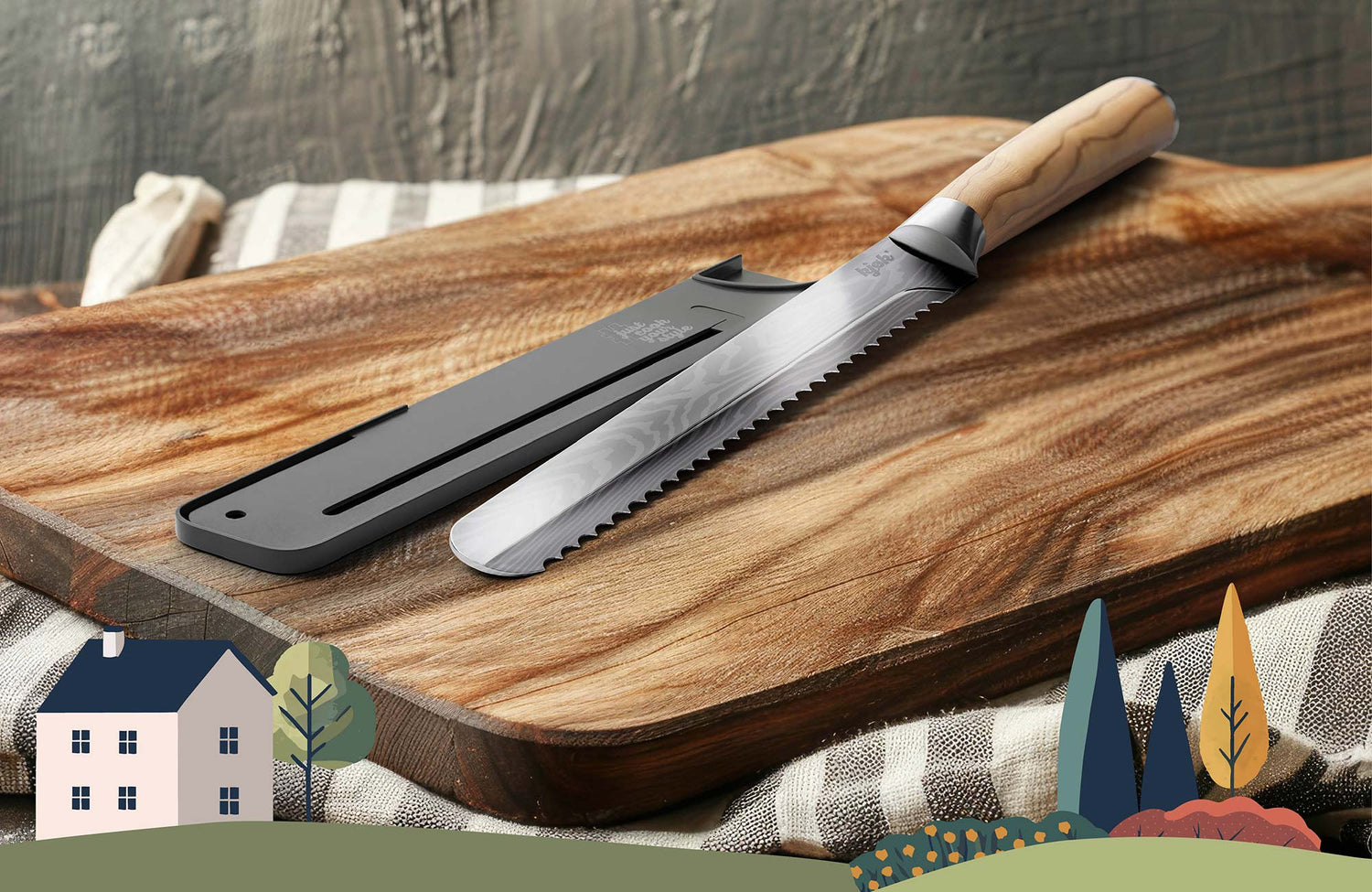
- Protective blade cover included, for the drawer and for transport.
- Weight 158 g, handle 12.5 cm long.
Good to know
- Resharpening: don't sharpen the serrated edge on a whetstone. When it starts to lose its edge, have it resharpened by a professional knife sharpener.
- Not dishwasher-safe: after use, rinse with warm water, with mild soap if needed, and dry thoroughly straight away so that no rust forms.
- Wood care: every few months, apply a little untreated olive or coconut oil to the olive wood handle, leave it to soak in for about 30 minutes, then let it air-dry.
- No slicing guide: for lots of slices of exactly the same thickness, a bread slicer is more convenient.
- Very large, wide loaves are easier to cut with a longer blade.
- Not for bones or frozen food.
Well suited to
Crusty bread such as wholemeal and sourdough · baguettes · rolls · soft bread · roasts
Not designed for
- Scoring dough before baking: use a razor blade or a dedicated scoring blade (bread lame) for that.
- Bones and frozen food.
What matters in a bread knife
| Criterion | What to check | kjøk bread knife |
|---|---|---|
| Edge | Serrated for firm crusts and a soft crumb | Serrated |
| Blade length | The blade should span the whole loaf | 20 cm |
| Steel and angle | Hardness (HRC) and cutting angle | 56 ± 2 HRC, 15° |
| Handle | Material and care | Italian olive wood, hand wash, oil now and then |
| Weight | Personal preference | 158 g |
| Resharpening | A serrated edge needs specialist equipment or a professional | Professional sharpening, not on a whetstone |
| Storage | Protect the edge | Protective cover included |
| Slicing guide | A spacer for slices of even thickness | None |
| Blade pattern | Genuine Damascus steel has many layers of steel; a pattern alone is purely visual | Laser-etched pattern, single-layer blade, not Damascus steel |
Goes well with: Chef's Knife, 20 cm (for meat and vegetables) · Santoku Knife, 17 cm · All knives
Based on: product data and the user manual for the kjøk bread knife (KJK-F010, edition 10/2026). Last updated: November 2026. Written by the kjøk team.
FAQs
Which types of bread is the kjøk bread knife suitable for?
What is the bread knife's handle made of?
How sharp is the bread knife's blade?
Is the bread knife suitable for right- and left-handed users?
How should I care for the bread knife?
Does it come with a protective sheath?
Does the kjøk bread knife have a serrated edge?
Can I sharpen the bread knife myself?
Is the bread knife dishwasher-safe?
Is the blade made of Damascus steel?
Can I use the bread knife to score dough?
Why does bread go stale?
Why kjøk?
-

Free delivery
Delivery won't cost you a thing – to all the countries we ship to.
-

Free returns
Not happy? No problem – we cover the return shipping.
-

100-day trial
Plenty of time to see the quality for yourself.
-

Durability
Quality materials for products that last.


We're here for you
-

Phone
You can reach us Monday to Friday from 9 am to 3 pm (German time) on +49 8232 8088322.
-

Email
You can also send us an email via our contact form.
-

FAQs
Find answers to common questions in our help centre.